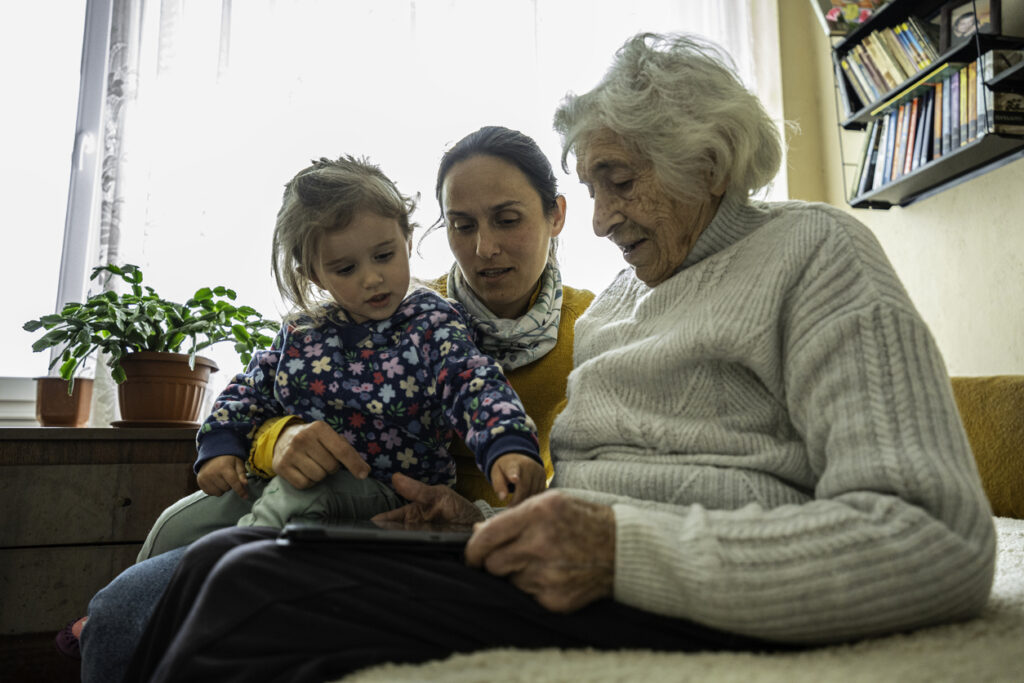
The Sandwich Generation and the High-Achieving Woman: Holding It All Together (At a Cost)
On paper, you’re doing everything right.
You’re competent, driven, and deeply responsible. You’ve built a career, you show up for your family, and you’re the person people trust to handle hard things.
But behind the scenes, it feels like too much.
If you’re balancing the demands of raising children while caring for aging parents, you’re likely part of what’s known as the sandwich generation. And for high-achieving women—especially here in the Bay Area, where the pace is fast and expectations are high—this season of life can become quietly overwhelming.
When Capability Becomes a Burden
You’re used to being the one who figures things out. You’re managing children’s needs and schedules, coordinating appointments for your parent who struggles with dementia, climbing the corporate ladder, and anticipating every problem before it actually happens. No wonder you’re exhausted.
Inside that “I’ve got it all together” demeanor, you’re probably feeling overloaded, irritated, depleted, disconnected from yourself and your partner, and just . . . done.
High-achieving women often don’t fall apart—they push through. And that’s exactly what makes burnout harder to recognize.
The Emotional Weight No One Talks About
Being in the sandwich generation isn’t just about time management—it’s about the emotional weight of caregiving. This is where caregiver burnout and emotional exhaustion start to build—especially for women who are used to over-functioning.
Living in places like Marin County, San Francisco, or Palo Alto often comes with a culture of high performance. You’re surrounded by people who are achieving, building, leading—and quietly holding a lot behind the scenes. So even when you’re overwhelmed, you might be telling yourself you “should be able to handle this,” minimizing your own needs, and only asking for help when you’re fully depleted.
What Burnout Looks Like for High-Achievers
Many high-achieving women don’t initially say “I’m burned out.” But you might be noticing:
- Constant stress and anxiety
- Difficulty with sleep
- Feeling emotionally numb or detached
- An increasing sense of resentment
You’re Not Failing — You’re Overwhelmed
If this sounds familiar, it’s not a failure—it’s a signal.
You’ve spent years being capable, reliable, and strong for everyone around you. The fact that you’re running on empty doesn’t mean you’ve done something wrong. It means you’ve been carrying too much for too long without enough support.
What Therapy Can Offer When You’re the One Who Holds Everything Together
Therapy can be a space where you don’t have to perform, manage, or hold everything together.
In our work, we might focus on:
- Understanding patterns of over-functioning and perfectionism
- Reducing anxiety and chronic stress
- Setting boundaries with aging parents and family members
- Navigating caregiver stress without losing yourself
- Reconnecting with your own needs, identity, and capacity
You Deserve Support Too
You’ve likely spent years being the one others rely on. But you deserve a space where you are supported, too.
If you’re a high-achieving woman in the sandwich generation feeling overwhelmed, burned out, or stretched too thin, therapy can help. We offer therapy for women across California, including those in the Bay Area, who are navigating caregiver stress, anxiety, and burnout.
You don’t have to keep doing this alone.